
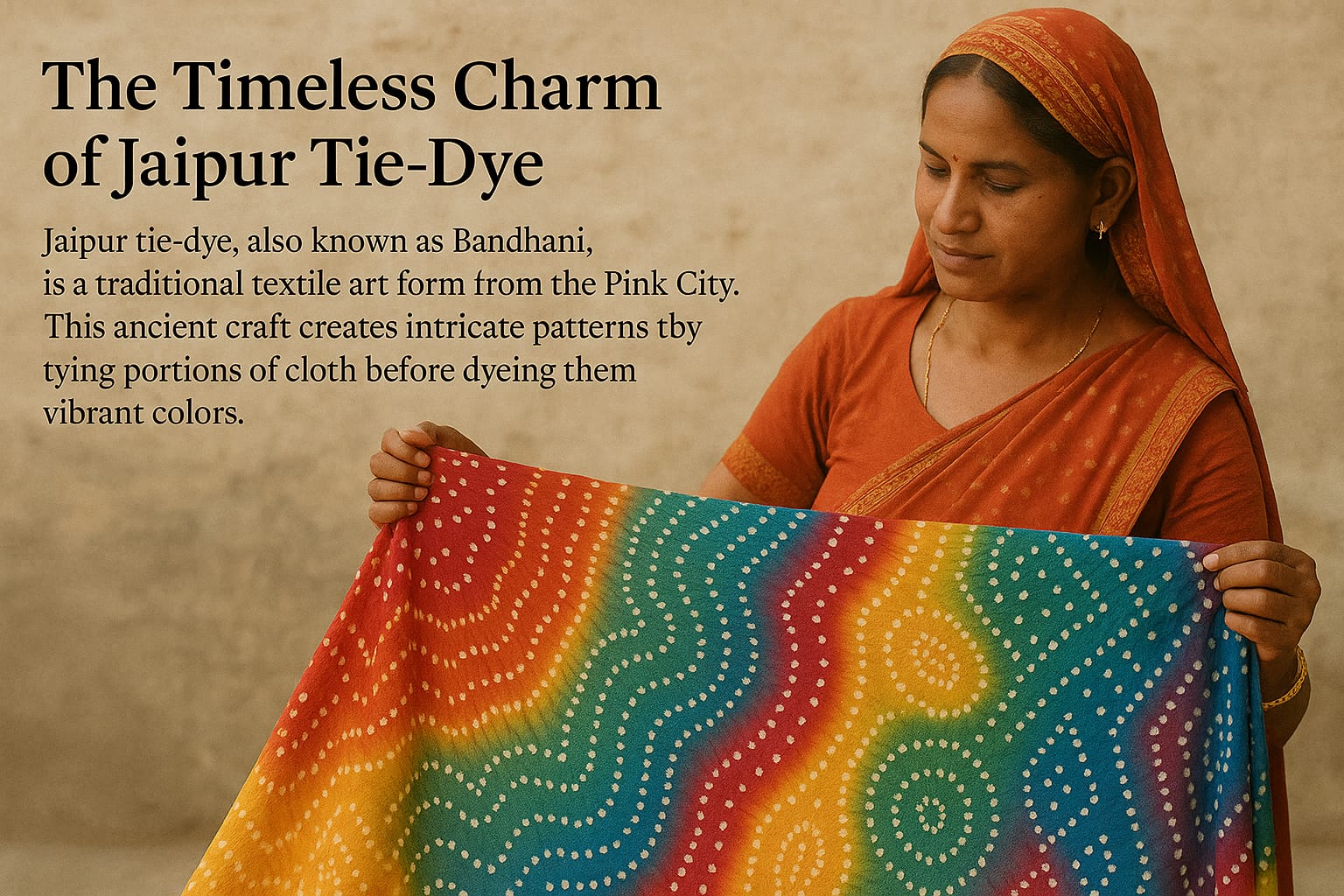
1. The Legacy of Bandhani in Jaipur
Jaipur, the Pink City, is not only known for its forts and palaces but also for its age-old textile traditions—one of the most vibrant being tie-dye, locally known as Bandhani. This art dates back to the time of the Rajputs and has been practiced by generations of artisans in Sanganer and Bagru. The term "Bandhani" is derived from the Sanskrit word Bandh, meaning “to tie.” In Jaipur, this practice has flourished through community knowledge and cultural heritage, adding character to the city’s textile story.
2. The Art of Knot and Color
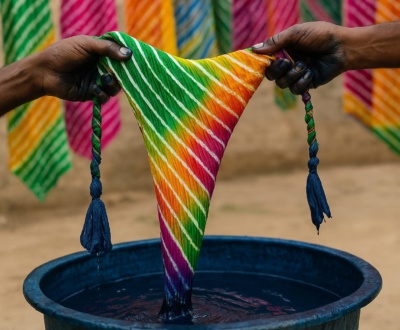
The tie-dye process begins with pinching and tying small portions of fabric with thread, followed by dyeing the cloth in vibrant hues. The tied sections resist the dye, creating stunning patterns once the threads are removed. The entire process is done by hand, involving immense patience and skill. The patterns include traditional dots, waves, stripes, and floral motifs—each symbolizing different cultural beliefs and rituals.
3. A Kaleidoscope of Hues
What sets Jaipur’s tie-dye apart is its rich color palette. From fiery reds and deep indigos to sunshine yellows and bottle greens, the combinations are bold and striking. Natural and chemical dyes are used, depending on the desired effect and fabric type. Bandhani is usually seen on cotton, silk, chiffon, and georgette fabrics. Popular motifs include leheriya (wave), mothra (small dots), and ekdali (single knot).
4. Fashion, function and beyond
While traditionally used in sarees, dupattas, turbans, and ghagras, tie-dye from Jaipur has taken on a contemporary form in recent years. Fashion designers are incorporating Bandhani into jackets, skirts, scarves, and even home decor. Its lightweight texture, vivid colors, and ethnic touch make it a favorite among both Indian and international designers. It’s not just a craft—it’s a style statement.
5. Sustaining an Artistic Heritage
In today’s age of mass production, tie-dye is a slow art. The rise of fast fashion and machine prints has posed challenges to local artisans. However, many NGOs, designers, and heritage textile brands are working to preserve this tradition. Workshops, exhibitions, and digital platforms are being used to promote Bandhani to newer markets. Supporting local tie-dye units not only keeps the tradition alive but also sustains the livelihoods of skilled craftspeople.
Conclusion of Tie-Dye Blog:
Tie-dye is not just a technique—it's a celebration of color, culture, and creativity. Rooted deeply in Indian traditions, especially in regions like Rajasthan and Gujarat, this art form continues to evolve while preserving its vibrant legacy. Whether it's the rhythmic patterns of Bandhani or the flowing stripes of Leheriya, each piece tells a story woven in threads and dyes. Today, tie-dye stands as a timeless symbol of handmade elegance, cherished both in traditional attire and contemporary fashion. Embracing tie-dye means embracing a heritage that’s colorful, soulful, and truly unique.
More from our blog
See all posts
Recent Posts
- Fabric Finshing Center in Jaipur |Fabric Finishing Services| December 17, 2025
- Fabric Stentering Service In Sanganer December 9, 2025
- Fabric Printing Services in Jaipur December 1, 2025