
Introduction
Rajasthan — the land of kings — is as vibrant in its culture as it is in its colors. But in Jaipur, the capital of this royal state, colors are more than just visual delights — they are a testament to history, identity, and craftsmanship. In the bylanes of Sanganer and Bagru, where printing blocks clatter and dye vats simmer under the sun, the story of Rajasthan’s colors unfolds — not as mere hues, but as a living legacy of dyeing and printing traditions. Jaipur’s famed textile techniques have transformed fabric into history and colors into memory, passed down through hands skilled in heritage.
The Historical Roots of Color
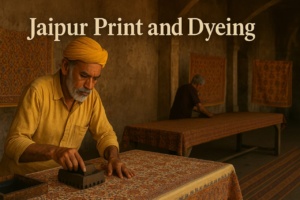
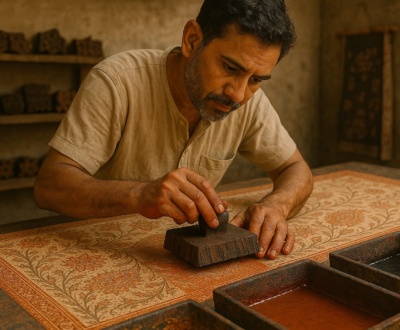
In Jaipur, color is given meaning by the printing techniques that apply it to fabric. Block printing — the most renowned of all — involves intricate, hand-carved wooden blocks dipped into natural dyes and pressed precisely on cotton or silk. This tradition is more than just art; it’s generational storytelling.
Each motif — be it the delicate buti, the floral bel, or the traditional leheriya pattern — speaks of a cultural belief, a festival, or a regional identity. For example:
Bagru printing is known for earthy tones and geometric designs, dyed using mud-resist techniques.
Sanganeri prints often feature white backgrounds with floral designs, known for their refinement and grace.
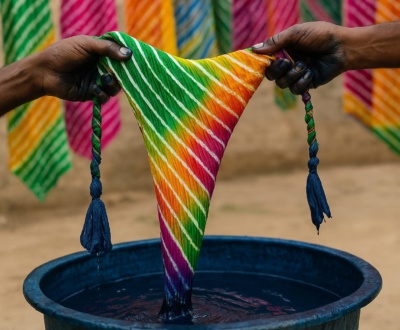
Leheriya and Bandhani are tie-dye techniques representing the monsoon, movement, and festivity.
These designs are not trends — they are traditions, symbolizing marriages, harvests, or royal processions.
The Role of Printing: Block by Block, Story by Story
In Jaipur, color is given meaning by the printing techniques that apply it to fabric. Block printing — the most renowned of all — involves intricate, hand-carved wooden blocks dipped into natural dyes and pressed precisely on cotton or silk. This tradition is more than just art; it’s generational storytelling.
Each motif — be it the delicate buti, the floral bel, or the traditional leheriya pattern — speaks of a cultural belief, a festival, or a regional identity. For example:
Bagru printing is known for earthy tones and geometric designs, dyed using mud-resist techniques.
Sanganeri prints often feature white backgrounds with floral designs, known for their refinement and grace.
Leheriya and Bandhani are tie-dye techniques representing the monsoon, movement, and festivity.
These designs are not trends — they are traditions, symbolizing marriages, harvests, or royal processions.
The Dyers of Jaipur: Custodians of Color
The real magic of Rajasthan’s textile heritage lies in the hands of the dyers — artisans who, without digital tools or chemical shortcuts, balance shades to perfection using only their intuition and experience.
A dyer in Bagru can judge the quality of indigo by the way the dye bubbles, or the depth of red by the hour it’s exposed to sunlight. These practices are built upon centuries of wisdom — where color is not chosen, but earned.
Moreover, Jaipur’s dyeing community is deeply rooted in sustainability. Using natural ingredients, water recycling, and sun-drying, the process respects both the fabric and the earth. In today’s world of fast fashion, Jaipur’s traditional dyers continue to uphold the values of slow, soulful creation.
From Past to Present: The Evolution of Jaipur’s Colors
While the techniques remain ancient, their applications have evolved. Designers from India and abroad now collaborate with Jaipur’s artisan clusters to create contemporary pieces rooted in heritage. Dupattas, sarees, kurtis, and even home textiles like curtains and bedsheets carry these timeless patterns — giving color to both tradition and trend.
Workshops in Sanganer are now visited not just by traders, but also by tourists and students eager to learn the meaning behind every block, every vat, every wash. It’s a revival — not just of technique, but of pride in handmade heritage.
Conclusion
The colors of Rajasthan, especially those born in Jaipur’s printing and dyeing towns, are not just hues — they are historical echoes of identity, craft, and community. Every shade on a block-printed kurta, every swirl on a tie-dyed saree, carries within it the thumbprint of a tradition that refuses to fade.
As the world turns to digital perfection, Jaipur’s imperfect, hand-touched fabrics remind us that beauty lies in the human touch — in color that breathes history. In the end, the colors of Rajasthan are not on fabric alone — they are woven into the soul of a land that continues to dye its legacy, one thread at a time.
More from our blog
See all posts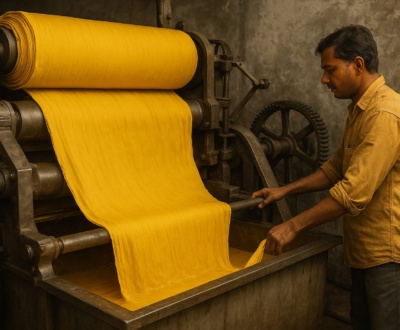
Recent Posts
- Fabric Finshing Center in Jaipur |Fabric Finishing Services| December 17, 2025
- Fabric Stentering Service In Sanganer December 9, 2025
- Fabric Printing Services in Jaipur December 1, 2025